
Obsession & The Phantom Pull
A Few (Working) Thoughts on Curry Barker's Film & The Phantom of the Opera

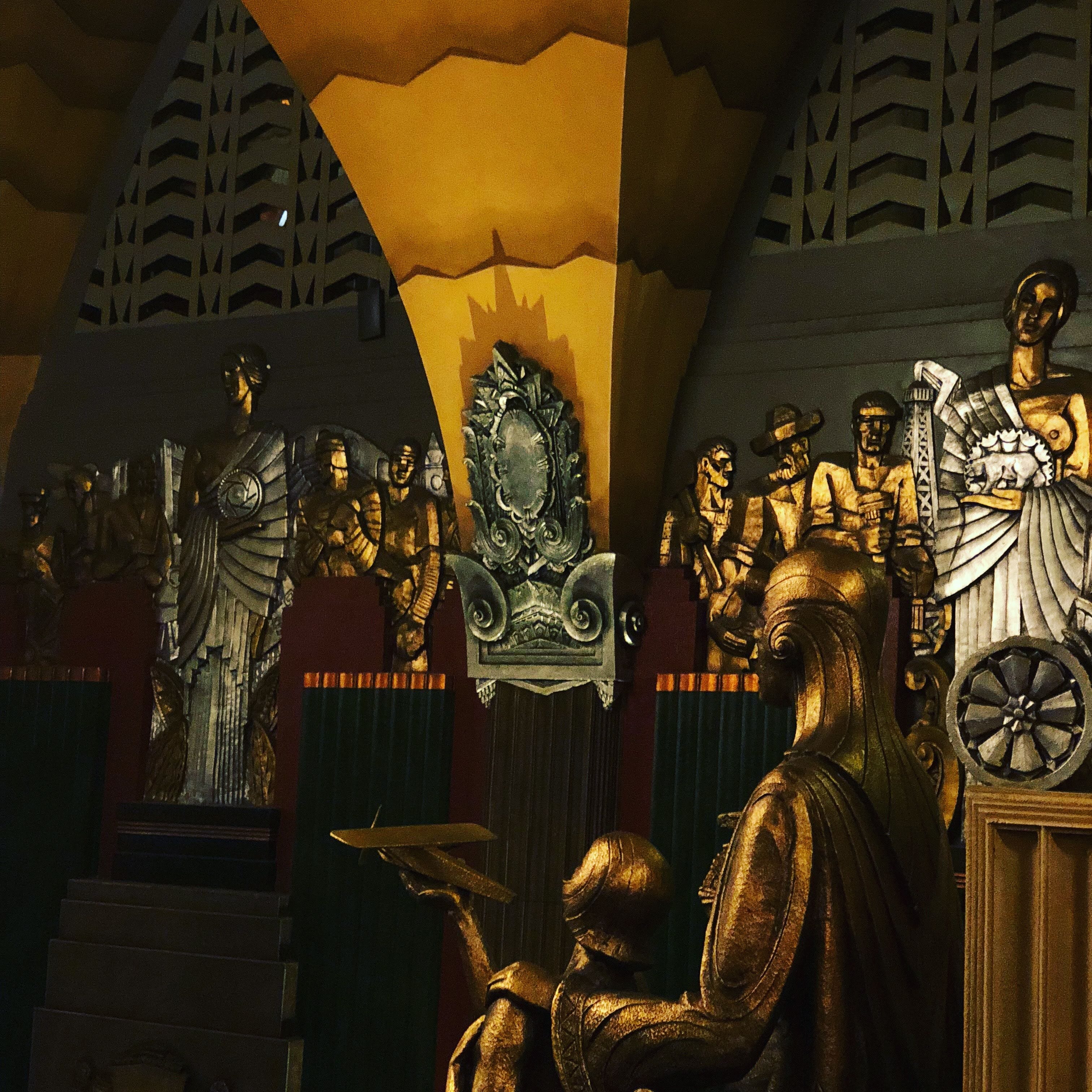
My feet struck the pavement hard as I ran down Hollywood Boulevard. Two blocks ahead, the Pantages Theatre blazed above the human tide, its neon sign a beacon over throngs of tourists and tweakers, while cars poured beside them, flooding a street filthy in its excess. The LA sky had given up its stars long ago. Some say they forsook the heavens for the promise of “something more” down below. Whether or not this is true, I knew only that they lay beneath my feet now, buried in cracked concrete, dimly gleaming beneath the grime and blackened gum, fragments of a fallen constellation. I scarcely looked at them as I ran like Halley’s Comet crossing the sky, each star flashing briefly beneath me before falling off into the dark. You could say there was a voice calling out to me, from deep within the chasm of the theatre, a phantom in the Pantages, you’ll be late…you’ll miss the show…why in God’s name did you think you could escape traffic on the 10? And so I ran faster, until my focus narrowed to that beacon and I was floating right above the stars to that one light, my chest pulled forward by an invisible string.
I reached the doors of the theatre breathless, raised my phone before the usher and waited for the scanner’s green light to admit me across that threshold and into another realm. Inside, the stars seemed lifted back into the heavens, where light no longer beckoned us forward, but remained above in solemn beauty, asking only that we stay still and raise our eyes once more. And in the theatre a chandelier was hanging waiting to be dropped in what would be a wonderful performance of The Phantom of the Opera.1

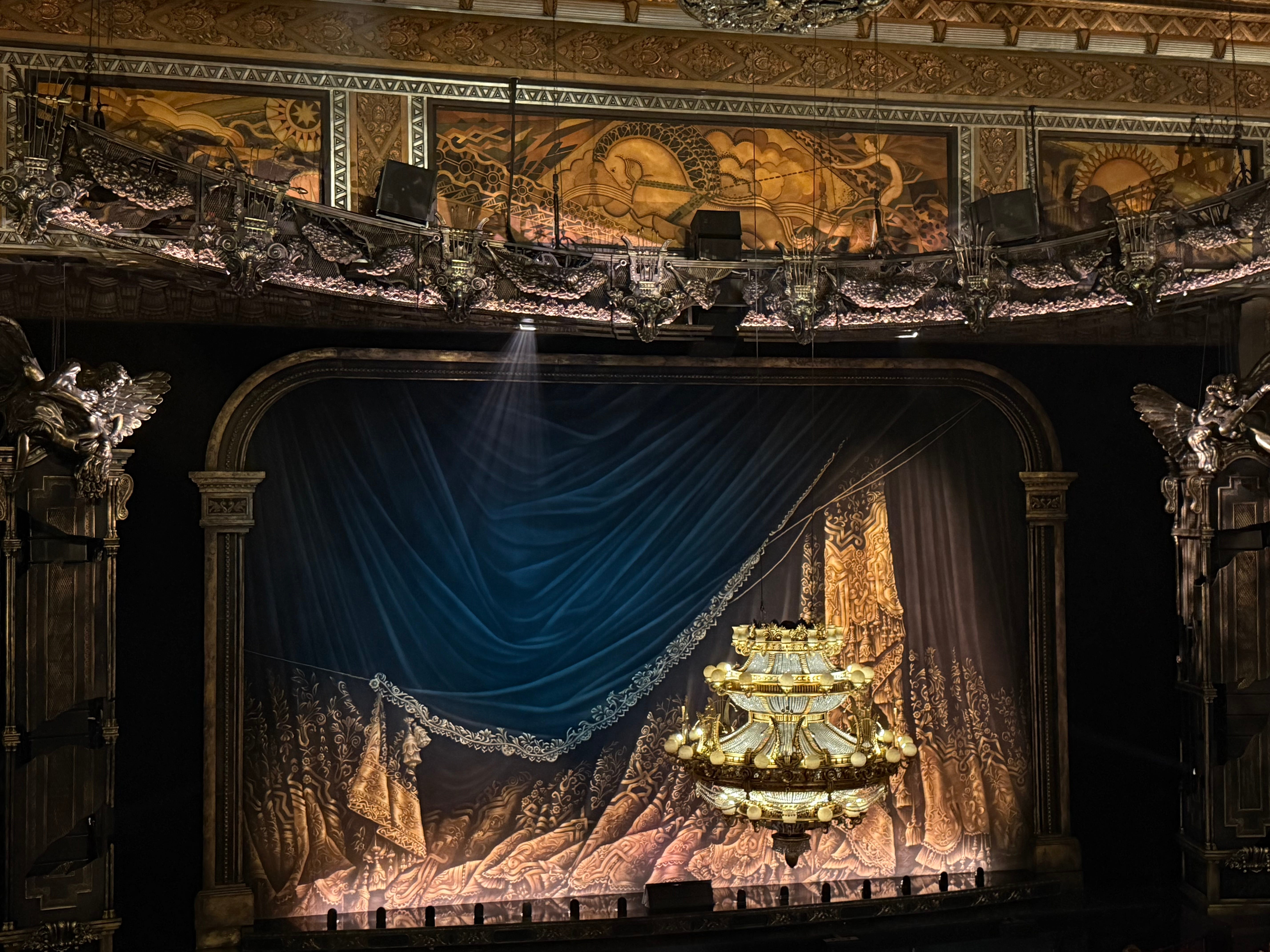
(some light spoilers ahead)
For those who have seen the stage production, or the 2004 film with Emmy Rossum and Gerard Butler, I should begin with something that will sound contentious: The Phantom of the Opera is not primarily a romance between Christine Daaé and the Phantom nor is it a love triangle between them and Raoul. Admittedly, it does bear all the hallmarks of a standard romance: sexy costumes, velvet-draped beds, candlelit boat rides, a hot masked man with childhood trauma (where have I seen this recently? Hmm. Does his name begin with “Aga” and rhyme with “memnon”? But we would hardly call that story a romance either). Still, at its heart, The Phantom of the Opera is a story about obsession. And, no, romance has no place for obsession2.
Which is all pretty great, because Curry Barker’s Obsession was already in my thoughts that night. I had seen the film about a week before and was equally terrified and fascinated by it. And so, while the chandelier trembled and the Phantom called to Christine from behind her mirror, Nikki kept appearing beside him in my mind. At first, the comparison between the two stories may seem painfully obvious and, at the same time, a little….forced. Nikki in Obsession and the Phantom in The Phantom of the Opera are both people who are obsessed with other people, Bear and Christine respectively, and that fixation becomes the narrative drive toward disaster. To a lot of us, that may be where we comfortably end the comparison. But where’s the fun in that?
And, to be fair, it is easy to cast the Phantom as a straightforward villain and Nikki as the true victim. But fans of the Phantom of the Opera also know that the phantom is more complicated than that. He is a man hurt by childhood trauma, living a life spent being barely tolerated because of his physical deformity. He survives through two masks: the literal one that conceals his face, and the symbolic one furnished by his musical genius. Both allow him to enter a world that would otherwise reject him, though he never really belongs to that world and so, must filter his creative genius through the object of his obsession: Christine Daaé. In a cynical interpretation, you could even argue that he doesn’t actually love Christine, but only as the vehicle for his true obsession: music.
But here is something we also have to consider. Christine is someone who wants something, a genuine desire for artistic transcendence on the stage and paternal comfort. The Phantom is her “Angel of Music” who offers her mentorship and a chance to step on the stage when she would have otherwise been shunned in a backup dance role. And this is where obsession becomes a bit more interesting. Because what we are seeing here is obsession as an extreme reflection of the object’s own desires. And what makes those desires extreme? It is not only that the desire becomes intense, but when there is no risk or challenges or obstacles, the part that would make the desire real in the first place, the desire comes back as something else…maybe something we don’t want. For example, when the Phantom forces the theatre managers to give Christine the lead role in the opera Hannibal, Christine replaces the prima donna, Carlotta, without auditioning for the role, and with less experience on stage than Carlotta. She bypasses all the challenges and steps for which a person would reasonably feel they have “earned” the fulfillment of their desire. So, is obsession nothing more than a distorted reflection of the desires of the person being obsessed over?
If we look at Curry Barker’s Obsession, it would seem like he is making a strong case in the affirmative. Nikki becomes Bear’s wish to be loved without reservation. Bear wants to get to the end result without the messy middle. He wants Nikki’s love without having to confess himself plainly, wait for her response, misunderstand her, be misunderstood, or endure the possibility that she might reject him. He wants to arrive at intimacy without making the humiliating journey through uncertainty. Nikki transforms into a monster, an obsession, a reflection of Bear’s desire to be loved without any challenge.
What Bear and Christine receive is not simply “too much” of what they wanted, with the obsessive figure driven by a continuous and overpowering desire/feeling or idea. They receive what they wanted without the conditions that would have made it meaningful, and obsession is what remains when that desire is detached from struggle and consequence.
And when the show ended and the Pantages sent us back onto Hollywood Boulevard, I walked toward my car with the beacon behind me. This time, though, I kept turning to look back at it. All the way down the boulevard, past the fallen stars and the grime, I looked behind me instead of ahead, as though some part of the theatre had followed me out and was waiting to see whether I would turn toward it again.
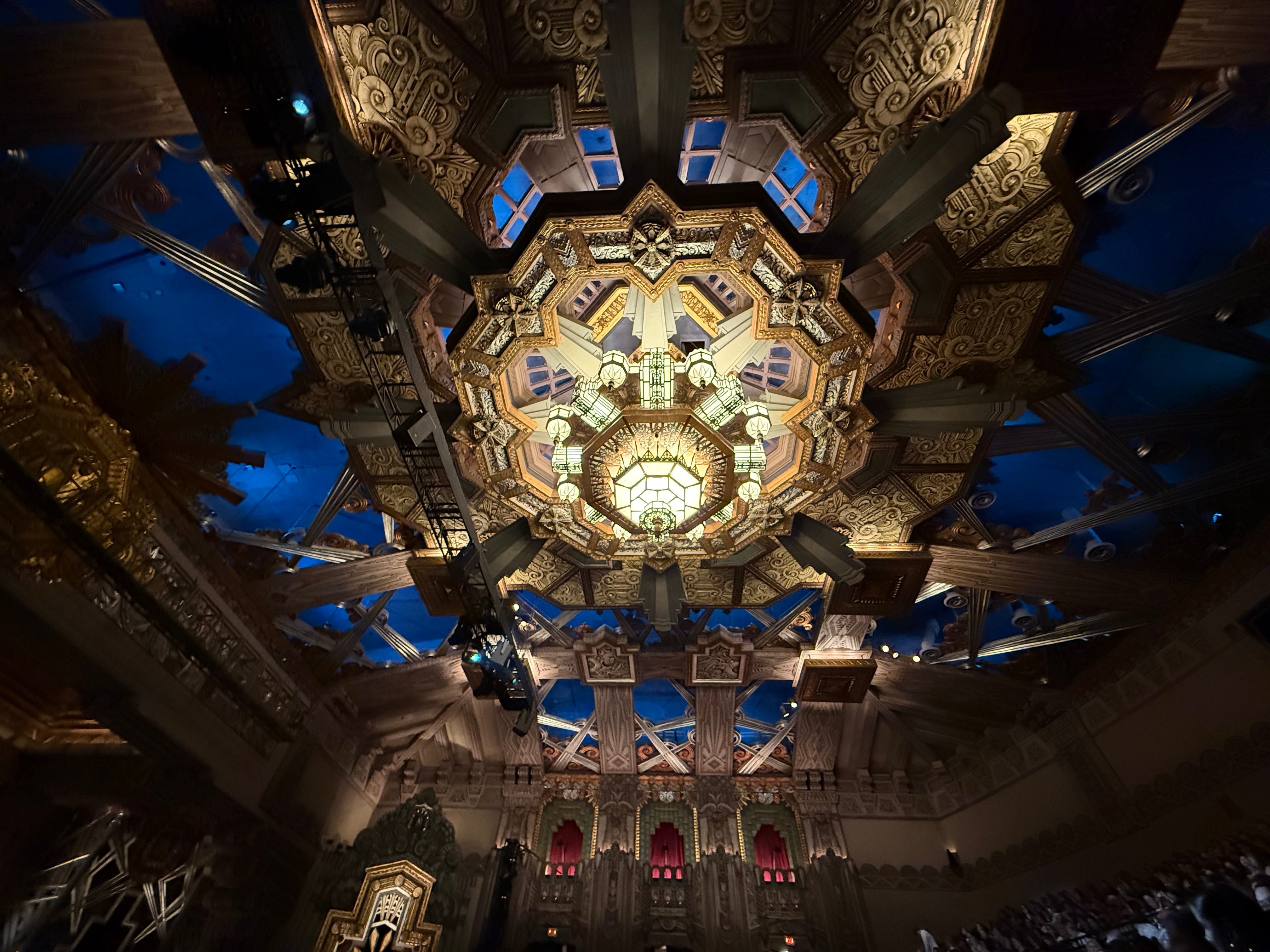
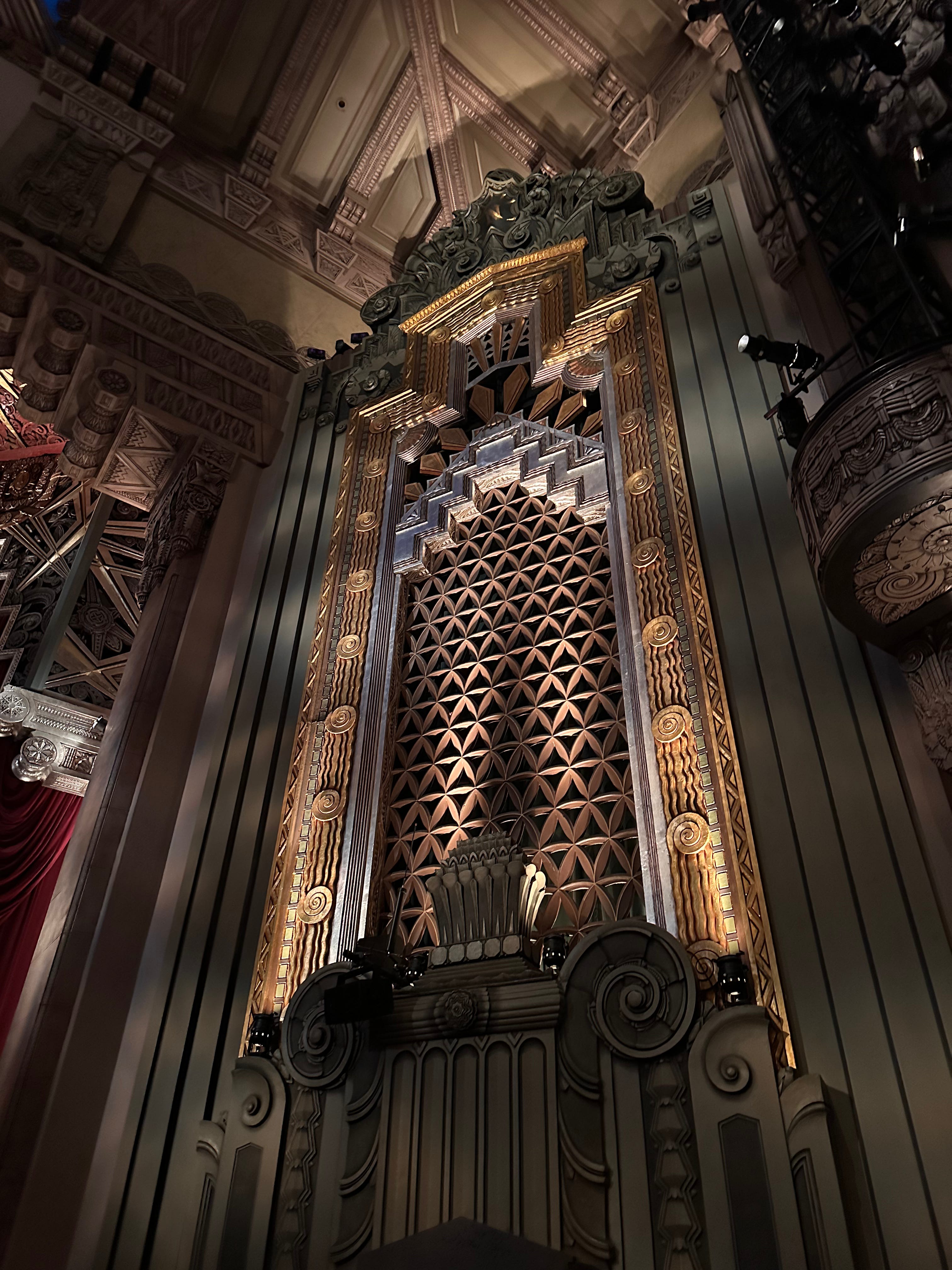
The Phantom of the Opera soundtrack is something I will never tire of listening to:
I feel like I am discussing one aspect of obsession and I don’t mean to apply it broadly.
I have seen Phantom a few times. My daughter is really into theatre and I will have to pick her brain about this. She was at a sleep over and they watched Obsession and was absolutely terrified (she's 12). I have not seen the movie yet but I am intrigued by the comparisons. I loved the photos of the theatre!
I'm the cynic. I've always felt that the Phantom didn't truly love Christine, but rather, what she represented, and what he felt he was entitled to. Part of the cruelty of what the Phantom endured is that he can't love in a gratifying and meaningful way, in a way that shows concern for somebody else. How could he?
I believe Christine was willing to put in the work to become great, but the Phantom was even more willing to push through (read: garrote from behind) any obstacles between them and their greatness. But she never asked for any of what happens.